
Iron-Rich Foods To Add To Your Diet: Complete Guide To Beating Iron Deficiency
Iron deficiency is one of the most common nutritional problems worldwide, especially among women, children, and people with restricted diets. Low iron can make you feel tired, weak, dizzy, and more prone to infections – often long before you realise what’s going on.
The good news: with the right diet and timely blood tests, iron deficiency can be detected early and effectively managed.
In this article, you’ll learn:
- Why your body needs iron
- Types of iron in food (heme vs non-heme)
- Best iron-rich foods for vegetarians and non-vegetarians
- What helps and what blocks iron absorption
- When to get tested for iron deficiency and which tests/packages at Seralis Lab are most relevant
- FAQs backed by research
Why Iron Is So Important For Your Body
Iron is a mineral your body cannot produce on its own – you must get it from food or supplements. It plays several vital roles:
- Oxygen transport: Iron is a key part of haemoglobin in red blood cells, which carries oxygen from your lungs to the rest of your body.
- Energy production: Without enough iron, your cells can’t produce adequate energy, leading to fatigue and weakness.
- Immune function: Iron supports a healthy immune response and helps your body fight infections.
- Brain function: Iron is important for concentration, memory, and overall cognitive performance.
- Normal growth in children: Iron deficiency in kids can affect growth, learning, and behaviour.
Prolonged iron deficiency can lead to iron deficiency anaemia, which is more severe and needs medical attention.
Types Of Iron In Food: Heme vs Non-Heme
Not all iron in food is the same. Understanding the two main forms helps you plan your diet better.
Heme Iron
- Found in: Animal-based foods like red meat, poultry, and fish.
- Absorption: Better absorbed by your body (about 15–35% absorption).
- Affected less by other dietary factors.
Non-Heme Iron
- Found in: Plant-based foods like lentils, beans, spinach, nuts, seeds, and fortified cereals.
- Absorption: Lower absorption (typically 2–20%).
- Strongly influenced by enhancers (like vitamin C) and inhibitors (like tea, coffee, and calcium).
Both types count towards your daily iron intake, but if you are vegetarian or vegan, you need to be more mindful about combining iron-rich foods with absorption enhancers.
How Much Iron Do You Need Every Day?
Daily iron requirements depend on age, sex, and life stage. Below are approximate Recommended Dietary Allowances (RDA) for healthy individuals:
- Adult men (19–50 years): ~8 mg/day
- Adult women (19–50 years): ~18 mg/day (due to menstrual blood loss)
- Pregnant women: ~27 mg/day
- Breastfeeding women: ~9–10 mg/day
- Adolescents (14–18 years): 11 mg/day (boys), 15 mg/day (girls)
- Children (1–13 years): 7–10 mg/day (varies by age)
- Adults 51+ years: ~8 mg/day (both men and women)
Note: People with certain conditions (e.g. heavy periods, gastrointestinal disorders, frequent blood donation, chronic kidney disease) may need different intakes as directed by a doctor.
Top Iron-Rich Foods To Add To Your Diet
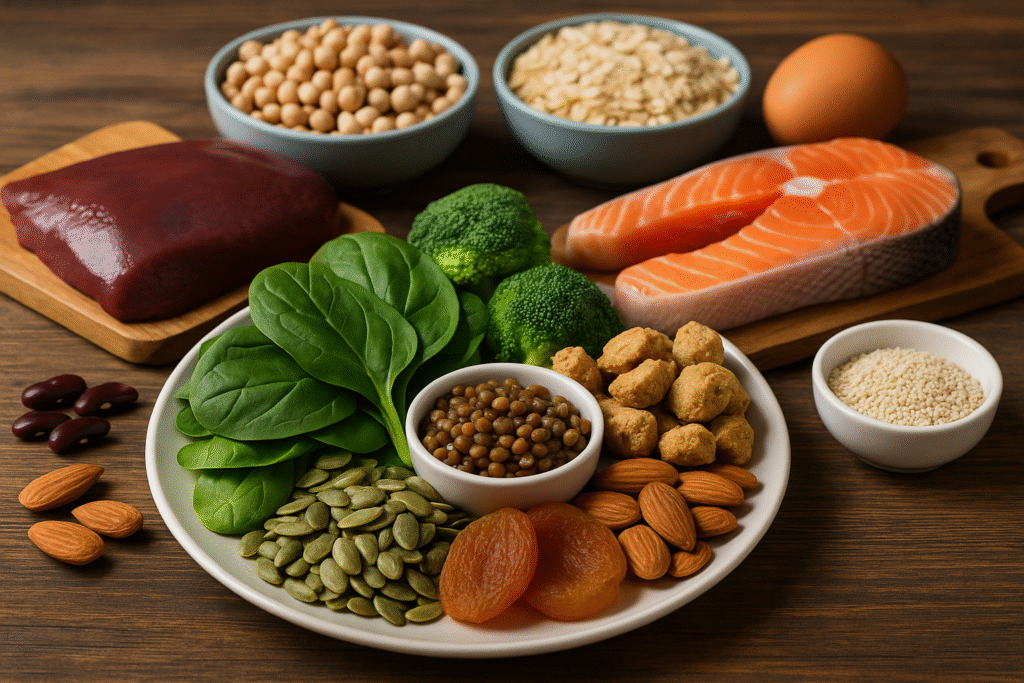
Here is a categorised list of iron-rich foods, including options for both vegetarians and non-vegetarians.
1. Iron-Rich Vegetarian Foods
Legumes (Pulses & Beans)
- Lentils (dal): About 3–3.5 mg of iron per 100 g cooked.
- Chickpeas (chana): Approx. 2.9 mg per 100 g cooked.
- Kidney beans (rajma): ~2–3 mg per 100 g cooked.
- Black beans, soya beans, and other pulses: Also good sources of iron and protein.
Tips: Soak and sprout beans/lentils where possible – this reduces phytates and improves iron absorption.
Green Leafy Vegetables
- Spinach (palak): About 2.7 mg iron per 100 g cooked.
- Fenugreek leaves (methi), amaranth leaves, mustard greens: All contribute non-heme iron.
Tip: Combine with vitamin C sources like lemon, tomatoes, or capsicum to boost absorption.
Nuts & Seeds
- Pumpkin seeds: Up to ~8–9 mg iron per 100 g.
- Sesame seeds (til): ~14 mg per 100 g (in concentrated amounts like chutneys or laddoos).
- Almonds, cashews, walnuts: Moderate iron along with healthy fats and protein.
Whole Grains & Millets
- Quinoa: About 1.5–2 mg iron per 100 g cooked.
- Oats: ~4.3 mg iron per 100 g (dry).
- Millets (ragi, bajra, jowar): Naturally rich in minerals including iron.
- Fortified breakfast cereals: Some varieties are fortified with iron (check the label).
Soya Products
- Tofu: ~5–6 mg iron per 100 g (varies by brand).
- Soy chunks/granules: Provide iron plus good quality plant protein.
Dried Fruits
- Raisins: ~1.9 mg iron per 100 g.
- Dates: Provide some iron plus quick energy.
- Dried apricots/prunes: Moderate iron and fibre content.
2. Iron-Rich Non-Vegetarian Foods
Red Meat
- Lean beef, mutton, lamb: ~2–3 mg heme iron per 100 g cooked.
- Very efficiently absorbed, making them strong dietary sources if consumed.
Poultry
- Chicken (especially dark meat like thighs): ~1–1.5 mg iron per 100 g.
- Turkey: Similar levels, with dark meat providing more iron than white.
Fish & Seafood
- Sardines, mackerel, tuna: Provide iron plus omega‑3 fatty acids.
- Shellfish (clams, mussels, oysters): Among the richest natural sources of heme iron.
Eggs
- Egg yolk: Contains moderate iron (~0.8–1.2 mg per large egg).
- Also offers high-quality protein and other nutrients like choline and B12.
What Helps Iron Absorption (And What Blocks It)
Ways To Increase Iron Absorption
- Combine iron with vitamin C: Have citrus fruits, amla, guava, tomatoes, bell peppers, or lemon water with your meals. Vitamin C can significantly increase non‑heme iron absorption.
- Use sprouting, soaking, fermenting: These methods reduce phytate levels in grains and pulses, enhancing mineral absorption.
- Cook in cast-iron cookware: Especially with acidic foods (like tomato-based curries), a small amount of iron may leach into the food.
- Add a little meat/egg/fish to meals (if non-vegetarian): Heme iron from animal sources can help your body absorb non‑heme iron from plant foods eaten in the same meal.
Foods & Habits That Reduce Iron Absorption
- Tea & coffee with meals: Tannins and polyphenols can inhibit iron absorption. Try to have them at least 1–2 hours away from iron-rich meals.
- Excessive calcium with iron: Very high doses of calcium (from supplements or dairy) can interfere with iron absorption when taken together.
- High-fibre, high-phytate foods (unsoaked legumes, bran, some whole grains): Phytates can bind iron and reduce absorption, but soaking and fermenting helps.
- Very high-dose zinc supplements: In some cases, may compete with iron absorption if taken together; space them out if prescribed.
Signs & Symptoms Of Iron Deficiency
Iron deficiency can develop gradually. Some common symptoms include:
- Constant tiredness, low energy, or fatigue
- Pale skin, pale inner eyelids, or pale nails
- Shortness of breath on mild exertion
- Frequent headaches
- Dizziness or light-headedness
- Cold hands and feet
- Hair fall and brittle nails
- Restless legs, especially at night
- Poor concentration, irritability, or “brain fog”
- Frequent infections or weak immunity
If you notice several of these symptoms, it is advisable to consult a doctor and get your blood tests done. Self-diagnosing and taking iron tablets without testing can be harmful, especially if you do not truly have iron deficiency.
Important Blood Tests For Iron Deficiency & Anaemia
To accurately assess your iron status, doctors often recommend specific blood tests. These tests are easily available at Seralis Lab.
Key Tests To Evaluate Iron & Anaemia
- Complete Blood Count (CBC): Evaluates haemoglobin, red blood cell count, haematocrit, and RBC indices to screen for anaemia.
- Iron Studies Profile:
- Serum Iron
- Total Iron Binding Capacity (TIBC)
- Transferrin Saturation
- Serum Ferritin – reflects stored iron and is one of the earliest markers of deficiency.
- Vitamin B12 & Folate Levels: To rule out other types of anaemia that may co-exist with or mimic iron deficiency.
Relevant Tests & Packages At Seralis Lab
Based on your symptoms and needs, you can consider the following tests and packages from Seralis Lab (always best done under medical guidance):
- Complete Blood Count (CBC) – a basic but essential test to screen for anaemia and general blood health.
Check details & book: Complete Blood Count (CBC) - Iron Studies / Iron Profile – includes parameters such as serum iron, TIBC, transferrin saturation, and may include ferritin depending on the package design.
Explore: Iron Profile Test - Serum Ferritin – helps evaluate body iron stores, especially useful in early iron deficiency or when inflammation is present.
More info: Ferritin Test - Vitamin B12 & Folate – to rule out other nutritional anaemias that can exist alongside iron deficiency.
View tests: - Anaemia / Fatigue Evaluation Package – a comprehensive package (where available) that may club CBC, iron profile, ferritin, vitamin B12, folate and related parameters to evaluate chronic tiredness and suspected anaemia in one go.
Check availability & details: Anaemia & Fatigue Evaluation Package
Note: Package availability and components can change. Refer to the respective test or package page on Seralis Lab for current details before booking.
Who Is At Higher Risk Of Iron Deficiency?
Certain groups need to be especially careful about their iron intake and monitoring:
- Women with heavy periods: Monthly blood loss increases iron requirement.
- Pregnant and breastfeeding women: Iron needs are higher to support foetal growth and milk production.
- Infants and young children: Rapid growth phases demand more iron.
- Teenage girls: Menstruation plus growth can easily lead to deficiency if diet is poor.
- Vegetarians and vegans: Rely mainly on non‑heme iron sources, which are less readily absorbed.
- People with digestive issues: Conditions like celiac disease, inflammatory bowel disease, gastric surgery, or chronic diarrhoea reduce absorption.
- Frequent blood donors: Regular donation can lower iron stores over time.
- Endurance athletes: Increased demands and small but chronic losses through sweat and minor gut bleeding.
If you fall into any of these categories, periodic check-ups and tests like CBC, Iron Profile, and Serum Ferritin may be beneficial, as advised by your doctor.
Practical Tips To Improve Your Iron Status Through Diet
- Include at least one iron-rich food in every major meal: For example, rajma, chana, palak, or meat/fish/egg.
- Add vitamin C to iron-rich meals: Squeeze lemon on dal/sabzi, have amla or orange with breakfast, include salad with tomatoes and capsicum.
- Space tea/coffee away from meals: Keep a gap of 1–2 hours before or after iron-rich meals.
- Use traditional methods: Soak, sprout, and ferment grains and pulses whenever possible.
- Cook in iron kadai or tawa occasionally: Especially for curries or tomato-based dishes.
- Don’t self-medicate with high-dose iron supplements: Always consult your doctor and, if needed, get tests done first via Seralis Lab.
When Should You See A Doctor?
Consult a healthcare professional if:
- You have persistent fatigue, breathlessness, dizziness, or very pale skin.
- Your periods are unusually heavy or prolonged.
- You are pregnant or planning pregnancy and have never had your iron levels checked.
- Your child appears unusually tired, pale, or has poor appetite and growth.
- You are already diagnosed with anaemia but not improving despite dietary changes.
Your doctor may recommend targeted tests such as CBC, Iron Profile, Serum Ferritin, and Vitamin B12 / Folate as part of a complete anaemia work-up.
FAQs About Iron-Rich Foods & Iron Deficiency
1. Can I correct iron deficiency with diet alone?
Mild iron deficiency can often be improved with a well-planned iron-rich diet and better absorption practices (vitamin C, reduced tea/coffee with meals, etc.). However, moderate to severe iron deficiency or iron deficiency anaemia usually requires supplements prescribed by a doctor, sometimes even intravenous iron. It is safer to test first (CBC, Iron Profile, Ferritin) and then follow medical advice.
2. Are plant-based iron sources enough for vegetarians?
Yes, vegetarians can meet their iron requirements through a combination of pulses, lentils, green leafy vegetables, millets, nuts, seeds, and fortified foods, especially if:
- Meals are paired with vitamin C-rich foods
- Tea/coffee intake is timed away from meals
- Soaking/sprouting/fermenting is used
Regular monitoring through tests like CBC and Serum Ferritin may be useful for higher-risk groups.
3. Is too much iron harmful?
Yes. Excess iron can be toxic and may damage organs such as the liver and heart. Conditions like haemochromatosis (a genetic iron overload disorder) make this more likely. That’s why you should not take high-dose iron supplements without testing and medical supervision. If your iron levels are already normal or high, extra supplementation can be dangerous.
4. When is the best time to take an iron supplement?
In general, iron supplements are absorbed best on an empty stomach; however, they can cause stomach upset in some people. Many doctors recommend taking them:
- Either 1 hour before or 2 hours after meals
- With vitamin C (like orange juice) for better absorption
Always follow your doctor’s or the product’s instructions. If you have stomach issues, your doctor may advise taking it with a small amount of food.
5. How often should I test my iron levels?
This depends on your health status:
- Generally healthy adults: Usually tested when symptoms suggest anaemia or during routine health check-ups.
- Pregnant women: Often tested at least once per trimester or as advised.
- People with known anaemia or chronic illnesses: Monitoring intervals are set by the treating physician.
You can discuss a suitable schedule with your doctor and use Seralis Lab tests such as CBC and Iron Profile as part of ongoing monitoring.
6. Does cooking reduce the iron content of food?
Iron is a mineral and is more stable than vitamins during cooking, so it is not easily destroyed by heat. However, some iron can be lost into cooking water (e.g. boiling and then discarding water). Steaming, pressure cooking with minimal water, and using the same water in dals/soups helps retain minerals.
Key Takeaways
- Iron is essential for oxygen transport, energy, immunity, and brain function.
- Both heme (animal) and non‑heme (plant) sources can support healthy iron levels if planned well.
- Vitamin C-rich foods boost iron absorption; tea, coffee, and high calcium close to meals reduce it.
- If you have symptoms of anaemia, don’t guess – test. Use targeted tests like CBC, Iron Profile, and Ferritin via Seralis Lab as advised by your doctor.
- Never start or continue high-dose iron supplements without medical guidance – excess iron can be harmful.
Next step: If you’ve been feeling low on energy, unusually breathless or pale, consider speaking with your doctor and scheduling a CBC and Iron Profile to understand your iron status clearly.
References
- World Health Organization (WHO). Anemia. Available at: https://www.who.int/news-room/fact-sheets/detail/anaemia
- National Institutes of Health (NIH), Office of Dietary Supplements. Iron – Fact Sheet for Health Professionals. Available at: https://ods.od.nih.gov/factsheets/Iron-Consumer/
- Centers for Disease Control and Prevention (CDC). Iron and Iron Deficiency. Available at: https://www.cdc.gov/nutrition/infantandtoddlernutrition/vitamins-minerals/iron.html
- National Health Service (NHS), UK. Iron deficiency anaemia. Available at: https://www.nhs.uk/conditions/iron-deficiency-anaemia/
- Cappellini MD, Musallam KM, Taher AT. Iron deficiency anaemia revisited. J Intern Med. 2020;287(2):153–170. DOI: 10.1111/joim.13004
- Hurrell R, Egli I. Iron bioavailability and dietary reference values. Am J Clin Nutr. 2010;91(5):1461S–1467S. DOI: 10.3945/ajcn.2010.28674F