
Millets: Types, Benefits, Nutrition & How to Add Them to Your Diet
Millets are one of the oldest cultivated grains in the world, but they’re making a strong comeback as a modern superfood. Naturally gluten-free, rich in fibre, packed with protein and loaded with essential micronutrients, millets are an excellent addition to an everyday Indian diet – especially if you are looking to manage weight, diabetes, heart health, gut health and more.
This guide covers:
- Types of commonly used millets in India
- Evidence-based health benefits of millets
- Who should eat millets – and who should be careful
- How to cook and include millets in daily meals
- Relevant health tests you should consider if you are starting or optimising a millet-rich diet
What Are Millets?
Millets are small-seeded cereal grains belonging mainly to the Poaceae (grass) family. They grow well in dry, arid conditions, need less water than rice or wheat, and are considered environmentally sustainable crops.
Nutritionally, most millets are:
- High in complex carbohydrates (slowly digested starch)
- Rich in dietary fibre
- Good sources of plant protein
- Contain important vitamins (especially B-complex) and minerals (iron, calcium, magnesium, phosphorus, zinc)
- Mostly gluten-free
Traditionally, millets have been a part of Indian diets in many states (Rajasthan, Karnataka, Maharashtra, Andhra Pradesh, Tamil Nadu, Gujarat and others), but urbanisation and the shift to polished rice/wheat led to a sharp decline in millet consumption. With growing concern about lifestyle diseases, millets are once again being recommended by nutritionists and doctors as a healthier grain choice.
Types of Millets Commonly Used in India
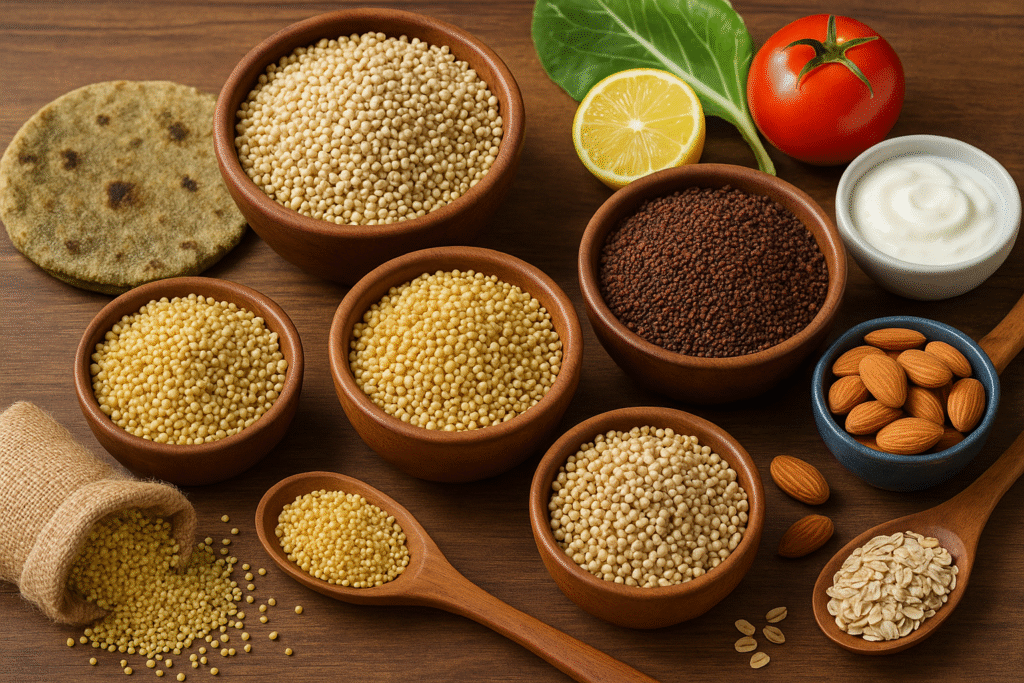
Millets are generally grouped into major millets and minor millets. Each type has a slightly different nutrient profile and health benefit.
1. Pearl Millet (Bajra)
- One of the most widely grown millets in India
- Rich in iron, protein, fibre and healthy fats
- Known for its ability to improve satiety and help in managing weight
Traditional uses: Bajra roti, khichdi, porridge, bhakri, and winter-special dishes in North & Western India.
2. Finger Millet (Ragi / Nachni)
- Excellent source of calcium – one of the best among cereals
- Contains good quality protein and amino acids like methionine
- Helps in improving bone health and may support blood sugar control
Traditional uses: Ragi dosa, ragi mudde, porridge, ragi malt, laddoos, cookies etc.
3. Foxtail Millet (Kangni / Thinai)
- Rich in dietary fibre and B vitamins
- Low glycaemic index (GI), making it suitable for diabetes-friendly meals
- Contains good amounts of magnesium and iron
Traditional uses: Upma, pongal, pulao, idli, dosa, kheer and salads.
4. Little Millet (Kutki / Samai)
- Has a low GI and high fibre content
- Often used as a replacement for rice in weight-loss diets
- Contains antioxidants that support overall health
5. Proso Millet (Chena / Barri)
- Light, quick-cooking millet
- Contains good amounts of protein, B vitamins and minerals
- May help reduce cholesterol when used to replace refined grains
6. Barnyard Millet (Sanwa / Jhangora)
- Very high in fibre and relatively low in calories
- Often used as a fasting grain during religious fasts
- Suitable for blood sugar and weight management
7. Kodo Millet (Kodra)
- Good source of polyphenols and antioxidants
- Helps in improving satiety due to high fibre
- Traditionally used for fermented foods and porridges
8. Sorghum (Jowar)
Technically a cereal grain, sorghum is often considered alongside millets.
- Rich in antioxidants, iron, phosphorus and fibre
- Gluten-free and suitable for flatbreads
- Associated with better heart health when included regularly
Nutritional Profile of Millets
The exact nutrient values vary between types of millet, but in general, 100 g of raw millet provides approximately:
- Calories: 320–380 kcal
- Carbohydrates: 65–72 g (mostly complex carbs)
- Protein: 8–12 g
- Fat: 3–6 g (mostly unsaturated)
- Fibre: 8–12 g (varies by type)
- Iron: 3–9 mg
- Calcium: Up to ~350 mg in finger millet (ragi)
- Magnesium, phosphorus, zinc, B-vitamins in meaningful amounts
Since millets are minimally processed (especially when consumed as whole grain), they retain most of their naturally occurring nutrients and phytochemicals.
Health Benefits of Millets (Backed by Research)
1. Support Blood Sugar Control and Diabetes Management
Many millets have a low to medium glycaemic index (GI), meaning they release glucose more gradually compared to refined grains like polished white rice.
- Their high fibre content slows digestion and absorption of carbohydrates.
- Several studies have shown that replacing refined grains with millets can reduce fasting blood glucose and HbA1c levels in people with type 2 diabetes.
Recommended, especially for:
- Prediabetes
- Type 2 diabetes
- Insulin resistance and metabolic syndrome
Relevant Health Tests You Should Consider
If you are adding millets as part of a diabetes or blood sugar management plan, it’s important to monitor your glucose and metabolic health. Consider:
- Fasting Blood Glucose Test – to check baseline blood sugar control.
- HbA1c (Glycated Haemoglobin) – shows 2–3 months average blood sugar; ideal for tracking the impact of dietary changes like millet consumption.
- Comprehensive Diabetic Profile / Diabetes Package – often includes fasting/post-prandial glucose, HbA1c, lipid profile and kidney function tests for full evaluation.
Visit Seralis Lab to explore their Diabetes and Metabolic Health Packages and book tests conveniently from home.
2. Help in Weight Management
Millets are:
- High in fibre – they increase satiety, keep you fuller for longer and help reduce overall calorie intake.
- Rich in protein and resistant starch – both support better appetite regulation and metabolic health.
- Less energy-dense than deep-fried foods and refined flour items – a smart choice for calorie-conscious diets.
Studies suggest that including whole grains like millets in a balanced diet can support weight loss and waist circumference reduction, especially when combined with physical activity.
Relevant Health Tests and Packages
- Lipid Profile – to assess cholesterol and triglycerides as you modify your diet with millets.
- Thyroid Function Tests (T3, T4, TSH) – thyroid imbalance can affect weight loss efforts; important to check if you have unexplained weight gain or fatigue.
- Comprehensive Health Check / Preventive Health Packages – these typically bundle blood sugar, lipid profile, liver and kidney function tests for an overall fitness view.
3. Improve Digestive Health
The insoluble and soluble fibre in millets acts as a natural prebiotic, feeding beneficial gut bacteria and supporting healthy bowel movements.
- Helps prevent constipation.
- May improve gut microbiome diversity.
- Can reduce the risk of diverticular disease and other colon issues over the long term.
Relevant Health Tests
- Stool Routine Examination – assesses gut health indicators and possible infections.
- Liver Function Test (LFT) – important if you’re shifting to a higher-fibre and whole-grain diet, as liver health closely interacts with digestion and metabolism.
4. Heart Health and Cholesterol Control
Millets may support cardiovascular health through several mechanisms:
- Their fibre and polyphenols can help lower LDL (“bad”) cholesterol.
- They are naturally low in saturated fat and sodium.
- Good magnesium content in many millets can support blood pressure regulation.
- Whole-grain consumption has been linked with reduced risk of heart disease and stroke.
Relevant Heart Health Tests
- Lipid Profile – to monitor total cholesterol, LDL, HDL and triglycerides as you increase millet intake.
- High-Sensitivity C-Reactive Protein (hs-CRP) – an inflammatory marker associated with cardiovascular risk.
- Complete Cardiac Risk Package – comprehensive evaluation for people with a family history of heart disease or existing risk factors.
5. Bone Health and Calcium Support (Especially Ragi)
Finger millet (ragi) is particularly famous for its high calcium content, making it beneficial for:
- Growing children
- Women during pregnancy and lactation
- Perimenopausal and postmenopausal women
- Older adults at risk of osteoporosis
Along with calcium, millets also provide magnesium and phosphorus – all key for strong bones and teeth.
Relevant Tests and Packages
- Serum Calcium – basic indicator of calcium status.
- Vitamin D Test (25-OH Vitamin D) – crucial for calcium absorption and bone health.
- Bone Health or Osteoporosis Screening Package – recommended for high-risk groups.
6. Rich in Antioxidants and Protective Phytochemicals
Millets contain various polyphenols, flavonoids and tocopherols that act as antioxidants:
- Help protect cells from oxidative damage
- May reduce the risk of chronic diseases like certain cancers, cardiovascular disease and neurodegenerative conditions
- Support better immune function
Whole, unpolished millets generally have higher antioxidant levels than their refined counterparts.
Relevant Tests
- Complete Blood Count (CBC) – basic immune and general health check.
- Comprehensive Health Check Packages – to monitor the impact of long-term dietary patterns on overall wellness.
7. Gluten-Free Alternative for Sensitive Individuals
Most millets are naturally gluten-free, making them suitable for:
- People with celiac disease
- Non-celiac gluten sensitivity
- Those choosing to reduce gluten for digestive comfort
However, cross-contamination can occur if millets are processed in facilities that also handle wheat or barley, so look for certified gluten-free products if you are highly sensitive.
Relevant Tests
- Celiac Disease Panel – if you suspect gluten intolerance or have symptoms like chronic bloating, diarrhoea, weight loss or nutrient deficiencies.
- Food Intolerance / Allergy Panels – for broader evaluation of dietary sensitivities.
Who Should Be Careful with Millets?
Millets are generally safe for most people, but consider the following:
1. Thyroid Disorders
Some millets contain naturally occurring goitrogens (compounds that can interfere with thyroid function) when eaten in very large quantities and in poorly processed forms. This is mostly a concern when:
- Millets are the major staple food eaten in high amounts daily.
- There is concurrent iodine deficiency.
If you have hypothyroidism or are on thyroid medication:
- Enjoy millets in moderation and as part of a varied diet.
- Use proper processing methods (soaking, fermenting, cooking thoroughly) which can reduce anti-nutritional factors.
- Ensure adequate iodine intake (iodised salt, seafood, etc.).
Important Thyroid Tests
- Thyroid Function Tests (TSH, Free T3, Free T4) – essential for anyone with suspected or known thyroid disease.
- Anti-TPO / Anti-TG Antibodies – for suspected autoimmune thyroiditis (Hashimoto’s).
2. Kidney Stones and Oxalate Concerns
Some millets may contain oxalates, which could be a concern for people with a history of certain types of kidney stones. If you have recurrent stones, consult your doctor or dietitian before dramatically increasing millet intake.
Relevant Kidney and Metabolic Tests
- Kidney Function Test (KFT) – to monitor creatinine, urea and overall kidney performance.
- Urine Routine / Microscopy – for checking crystals, infections and other urinary abnormalities.
3. Mineral Absorption and Anti-Nutritional Factors
Like many whole grains and legumes, millets contain phytates and tannins that can reduce the absorption of iron, zinc and calcium. This effect can be minimised by:
- Soaking millets before cooking
- Fermenting (as in idli/dosa batter)
- Sprouting (for some types)
- Combining with vitamin C-rich foods (lemon, amla, citrus, tomatoes) to improve iron absorption
Relevant Deficiency Screening
- Serum Ferritin and Iron Studies – if you suspect or have anaemia.
- Vitamin B12 and Folate – important for those on primarily vegetarian diets with millets as a key staple.
How to Include Millets in Your Daily Diet
1. Start Gradually
If you are new to millets:
- Begin by replacing 1 meal a day (for example, rice at lunch) with a millet like foxtail, little or barnyard millet.
- Let your digestive system adjust to the higher fibre content.
2. Smart Meal Swaps
- Breakfast: Ragi dosa, millet upma, millet poha, millet idli, ragi porridge.
- Lunch/Dinner: Millet khichdi, foxtail millet pulao, barnyard millet “rice”, bajra/jowar roti.
- Snacks: Ragi laddoo, millet crackers, millet-based chivda, puffed jowar snacks.
3. Use Proper Cooking and Processing Methods
- Rinsing and soaking: Rinse millets thoroughly; soaking for a few hours can improve digestibility.
- Fermentation: Fermented batter (idli, dosa) enhances nutrient bioavailability and gut benefits.
- Sprouting: Sprouted ragi is especially nutritious and easier to digest.
4. Pair with Protein and Vegetables
To make a balanced meal with millets:
- Add pulses/legumes (dal, chana, rajma) or animal protein (curd, paneer, eggs, fish, chicken).
- Include colourful vegetables for fibre, vitamins and minerals.
- Use healthy fats like ghee, cold-pressed oils or nuts/seeds in moderation.
How Much Millet Should You Eat Daily?
For most healthy adults, millets can safely replace other cereals as a part of 2–3 meals a day, provided:
- The overall diet remains balanced (adequate protein, good fats, vegetables, fruits).
- You do not have specific medical conditions where very high millet intake is contraindicated.
- You keep portion sizes reasonable – similar to your usual rice/wheat portions.
If you have diabetes, thyroid disease, kidney issues or severe nutritional deficiencies, consult your doctor or a registered dietitian before making major dietary changes. It’s also wise to track key health markers through regular lab testing at Seralis Lab.
Key Health Checks to Combine with a Millet-Rich Lifestyle
To optimise your health as you adopt millets and other whole foods, consider a periodic health evaluation.
Recommended Baseline Tests
- Complete Blood Count (CBC)
- Fasting Blood Glucose & HbA1c
- Lipid Profile
- Liver Function Test (LFT)
- Kidney Function Test (KFT)
- Thyroid Profile (TSH, T3, T4)
Specialised Packages at Seralis Lab
Depending on your age, existing health conditions and goals (weight loss, diabetes management, heart health, etc.), browse and book from Seralis Lab’s tailored packages:
- Diabetes Panel / Diabetic Health Package
- Cardiac / Heart Health Package
- Comprehensive Preventive Health Check
- Bone and Joint Health Package
Regular testing helps you and your doctor refine your diet (including millet intake), exercise and lifestyle for the best possible outcomes.
Frequently Asked Questions (FAQs) About Millets
1. Are millets better than rice and wheat?
Millets are generally more nutrient-dense and fibre-rich than polished white rice and refined wheat flour (maida). They provide slower-releasing carbohydrates, more minerals and often more protein. However, it’s the overall diet quality and portion control that ultimately matter, not any single grain alone.
2. Can people with diabetes eat millets daily?
Yes, many millets (especially foxtail, little, barnyard, kodo and ragi) are suitable for people with diabetes when:
- Consumed in measured portions
- Prepared with minimal oil and sugar
- Combined with adequate protein and vegetables
Always monitor your blood glucose and HbA1c. You can book periodic diabetes tests at Seralis Lab to track response.
3. Are millets safe during pregnancy?
In most cases, yes. Millets like ragi (for calcium and iron) and bajra can be very beneficial during pregnancy as part of a balanced diet. However, avoid sudden drastic dietary changes, and discuss your meal plan with your gynaecologist or dietitian, especially if you have gestational diabetes, thyroid issues or anaemia.
4. Do millets cause gas or bloating?
The high fibre content in millets can cause temporary gas or bloating in some people, particularly if they are not used to a high-fibre diet. To minimise discomfort:
- Increase millet intake gradually
- Soak and cook thoroughly
- Stay well hydrated
5. Which millet is best for weight loss?
No single millet is “the best”. However, barnyard millet, foxtail millet, little millet and jowar are commonly recommended for weight management due to their high fibre and relatively lower calorie density. Combine them with adequate protein and vegetables for a filling, balanced meal.
6. Can millets replace all my cereals?
Millets can replace a substantial part of your cereal intake, but variety is key. A mix of whole millets, brown/red rice, whole wheat, oats and other whole grains can offer a broader spectrum of nutrients and reduce any single-grain drawbacks.
7. How can I know if millets are suiting me?
Observe your body’s response over a few weeks:
- Energy levels and digestion
- Blood sugar readings (if diabetic)
- Changes in weight, appetite and bowel habits
Pair this with periodic blood tests at Seralis Lab (glucose, lipids, thyroid, haemoglobin) to track internal changes accurately.
References
- Krishnan, R., & Dharmaraj, U. Health Benefits and Applications of Finger Millet (Ragi). Journal of Food Science and Technology. Available at: https://www.ncbi.nlm.nih.gov/pmc/articles/PMC4924139/
- Devi, P. B. et al. (2014). Health benefits of finger millet (Eleusine coracana L.) polyphenols and dietary fiber: a review. Journal of Food Science and Technology, 51(6), 1021–1040. Available at: https://link.springer.com/article/10.1007/s13197-011-0584-9
- Anitha, S. et al. (2021). A systematic review and meta-analysis of the potential of millets for managing and reducing the risk of developing diabetes mellitus. Frontiers in Nutrition, 8:687428. Available at: https://www.frontiersin.org/articles/10.3389/fnut.2021.687428/full
- Sharma, N. et al. Millets: Future of Food and Nutrition Security. Indian Journal of Agricultural Sciences. Available at: https://epubs.icar.org.in/index.php/IJAgS/article/view/98649
- Pathak, R. R. et al. Effect of Millet-Based Diet on Lipid Profile and Cardiovascular Risk. International Journal of Food Sciences and Nutrition. Available at: https://pubmed.ncbi.nlm.nih.gov/23855270/
- FAO & ICAR. Millets – Nutritional and Health Benefits. Food and Agriculture Organization of the United Nations. Available at: https://doi.org/10.4060/cb7612en
Takeaway
Millets are a powerful, time-tested addition to your plate: nutrient-dense, fibre-rich, diabetes-friendly and heart-healthy. When used smartly and combined with regular health monitoring – including periodic lab tests and packages from Seralis Lab – they can play a key role in preventing and managing many lifestyle diseases.
Begin with small swaps, enjoy traditional millet recipes in modern ways, and partner with your healthcare provider to create a millet-inclusive plan that truly works for your body.