
The Future of Cancer Detection: Finding Tumours Before They Show Signs
Cancer is often most dangerous not because of how fast it spreads, but because of how late it is detected. In India, many cancers are still diagnosed at stage 3 or 4, when treatment is more complex, expensive, and less effective. The future of cancer care lies in catching tumours before they cause symptoms — sometimes even before they fully form.
With advances in blood-based tests, genetics, imaging, and artificial intelligence, we’re moving toward a world where regular health checks can detect cancer early and silently. This article explains how early detection is evolving, what technologies are shaping the future, and how you can practically use today’s tests to protect yourself and your family.
Why Early Cancer Detection Matters So Much
The earlier a cancer is found, the better the chances of cure or long-term control. For many cancers (like breast, cervical, colon, and some blood cancers), survival rates dramatically improve when they are detected in stage 1 or 2.
Challenges in India
- Late diagnosis: Many people ignore early symptoms or do not have access to regular screening.
- Limited awareness: People often don’t know which tests to do and when.
- Stigma & fear: Fear of diagnosis and treatment costs delay testing.
- Rural–urban divide: Advanced diagnostics are still more available in cities.
New technologies aim to change this by making screening:
- Less invasive (e.g., blood tests instead of biopsies)
- More accurate
- Earlier in the disease process
- More accessible for routine check-ups
How Cancer Is Detected Today
Current detection methods mainly fall into three categories:
1. Imaging Tests
- Mammography: for breast cancer screening.
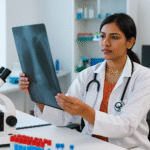
- Ultrasound & CT scans: for detecting masses in organs.
- MRI & PET-CT: for detailed and functional imaging, usually done after suspicion arises.
2. Laboratory & Tumour Marker Tests
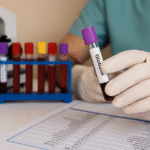
These tests measure specific substances in blood that may increase in certain cancers. They are not perfect on their own, but they support diagnosis, monitoring, and risk assessment.
- PSA (Prostate-Specific Antigen) – linked to prostate cancer.
- CA 125 – can be elevated in ovarian cancer and some other conditions.
- CEA (Carcinoembryonic Antigen) – sometimes raised in colon or other cancers.
- AFP (Alpha-Fetoprotein) – used especially in liver cancer.
You can access several tumour marker packages for early risk assessment through Seralis Lab:
- Comprehensive Tumor Marker Packages – combined panels for multiple cancers.
- Liver Package (LFT, GGT, AFP, PT) – useful in assessing liver health and liver cancer risk.
- Prostate Package (PSA & Testosterone) – relevant for men above 45 or with urinary symptoms.
3. Tissue Biopsy
The gold standard for confirming cancer is a biopsy, where a doctor collects a small piece of tissue from the tumour and examines it under a microscope. However, it is invasive, sometimes painful, and usually done only after a lesion is suspected.
What’s Changing: The New Era of Early Cancer Detection
1. Liquid Biopsies – Detecting Cancer via Blood
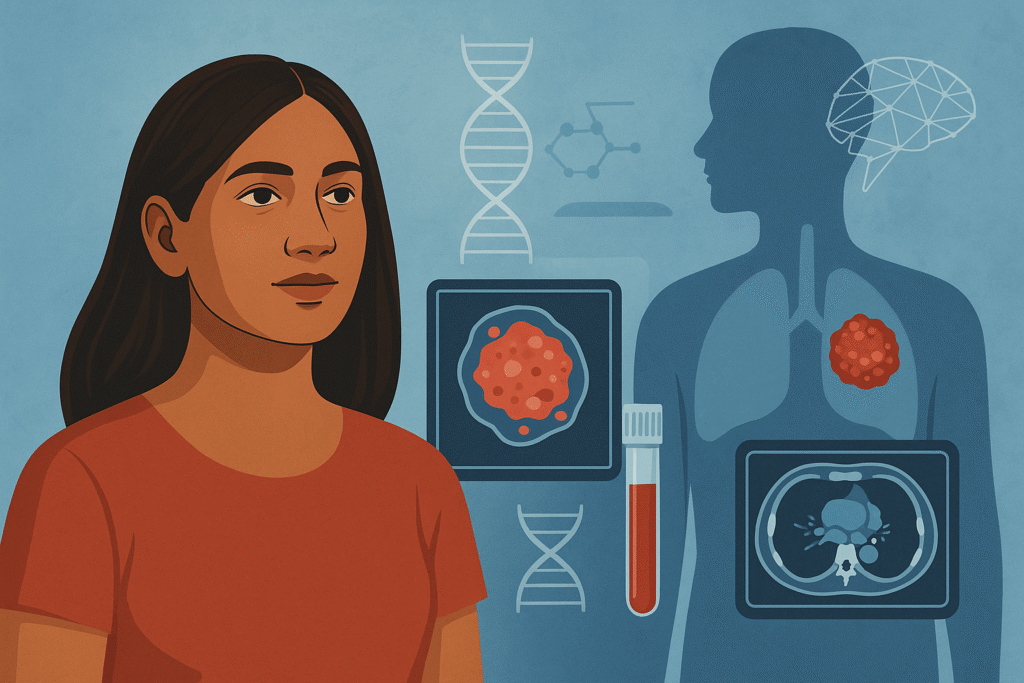
Liquid biopsy refers to detecting cancer-related material (like DNA, cells, or proteins) from blood or other body fluids, instead of directly from a tumour.
How Liquid Biopsy Works
- Circulating tumour DNA (ctDNA): Small fragments of cancer DNA shed into the bloodstream.
- Circulating tumour cells (CTCs): Whole cancer cells that break off from tumours.
- Exosomes & microRNA: Tiny particles and molecular signals released by tumour cells.
These can be picked up even when the tumour is very small — sometimes before it appears clearly on scans.
Future Potential of Liquid Biopsy
- Screening: One blood test that can screen for multiple cancers at once.
- Tracking response: See if treatment is working earlier than imaging can show.
- Detecting recurrence: Pick up cancer re-growth months before symptoms.
While truly multi-cancer liquid biopsy screening is still being refined globally, certain related tests already help in early risk detection and monitoring. In India, pairing regular health check-ups with specific tumour markers and organ-function packages is currently the most practical step.
2. Genetic & Genomic Testing – Understanding Your Cancer Risk
Some people have a higher lifetime risk of cancer due to inherited genetic changes. For example:
- BRCA1/BRCA2 mutations increase the risk of breast and ovarian cancer.
- Lynch syndrome raises the risk of colon and some other cancers.
Genetic testing can help:
- Identify people who should start screening earlier than usual.
- Guide family members to get tested and take preventive steps.
- Inform treatment choices if cancer develops.
In the Indian context, where there is often a strong history of family living together and multi-generational data, genetic counseling and testing can be especially powerful when there’s:
- Multiple family members with the same type of cancer.
- Early onset cancers (e.g., breast cancer before 40).
- Rare cancers in the family.
3. AI, Big Data & Advanced Imaging
Artificial Intelligence (AI) is now assisting radiologists and pathologists in catching subtle changes that humans may miss:
- AI-assisted mammography: identifies tiny calcifications or distortions suggestive of early breast cancer.
- AI on CT scans: can flag suspicious lung nodules at very small sizes.
- Digital pathology: AI tools analyse biopsy slides to grade tumours more precisely.
As these systems are trained on more Indian population data, they will become even more relevant in our context.
Key Screening Tests for Early Cancer Detection in India
While futuristic technologies are emerging, many lives can be saved today by using evidence-based screening tests that already exist.
1. Breast Cancer Screening
- Self-breast examination: monthly, starting from the early 20s of age.
- Clinical breast exam by doctor: every 1–2 years after 30.
- Mammography: usually from age 40–45 onwards, or earlier if high risk.
Supportive tests that help assess overall hormonal and metabolic health:
- Women Wellness Package (LH, FSH, Estradiol, Prolactin, TSH)
- PCOD/PCOS Package – for women with menstrual irregularities, obesity, or hormonal imbalance.
2. Cervical Cancer Screening
- Pap smear: recommended for women aged 21–65 at intervals advised by doctor.
- HPV testing: detects high-risk HPV strains that can cause cervical cancer.
Regular screening is especially important for Indian women, where cervical cancer remains one of the most common cancers.
3. Colorectal (Colon) Cancer Screening
- Stool tests: to detect hidden blood.
- Colonoscopy: from age 45–50 or earlier in high-risk individuals.
Metabolic health strongly influences colon cancer risk. Consider comprehensive screening for metabolic syndrome and inflammation:
4. Prostate Cancer Screening
For men, especially above 50 (or 45 with family history):
- PSA blood test
- Digital rectal examination (DRE) by a doctor
Relevant package:
5. Liver Cancer & Chronic Liver Disease Monitoring
Chronic hepatitis infection, alcohol use, fatty liver, and certain toxins increase liver cancer risk. Monitoring liver function regularly is essential.
- Liver Package (LFT, GGT, AFP, PT) – includes AFP, a marker relevant in liver cancer.
- Fatty Liver Package – particularly important with rising non-alcoholic fatty liver disease in urban India.
6. Thyroid Cancer & Thyroid Health
Most thyroid nodules are benign, but certain patterns require closer evaluation.
Role of Full Body Checkup Packages in Early Cancer Detection
While no single “full body checkup” can guarantee that you don’t have cancer, comprehensive panels can uncover warning signs:
- Unexplained anaemia (may signal hidden bleeding or malignancy).
- Raised liver enzymes or AFP (possible liver disease/cancer risk).
- Abnormal kidney markers.
- Very high ESR/CRP (general inflammation).
- Persistent high blood sugar, cholesterol, or obesity – all linked to higher risk of certain cancers.
Seralis Lab offers graded full-body packages suitable for different age groups and budgets:
For individuals with diabetes, obesity, or sedentary lifestyle:
- Diabetes Package (Fasting, PPBS, HbA1c)
- Obesity & Metabolic Risk Package (example; choose according to your doctor’s suggestion)
Lifestyle Choices That Lower Cancer Risk (Indian Context)
Early detection is powerful, but prevention is even better. Many lifestyle changes can significantly reduce the risk of developing cancer.
1. Diet: Indian Foods That Help
- Fibre-rich foods: Whole wheat roti, brown rice, millets (jowar, bajra, ragi), oats, dalia, and seasonal fruits (guava, apple, papaya, banana) help maintain gut health and reduce colon cancer risk.
- Protein sources: Moong dal, chana, rajma, chole, soybeans, paneer, curd, tofu, eggs, and fish support healthy immunity and repair.
- Colourful vegetables: Palak (spinach), methi, lauki, tori, bhindi, carrots, beetroot, capsicum, cabbage, and broccoli are rich in antioxidants.
- Spices with benefits: Haldi (turmeric with black pepper), jeera, dhania, and garlic have anti-inflammatory properties.
- Healthy fats: Mustard oil, groundnut oil, sesame (til) oil, ghee in moderation; include nuts and seeds like almonds, walnuts, flax seeds, sunflower seeds.
For those with dietary-related issues, check key nutrient levels through:
- Vitamin Package (Vitamin D & B12)
- Anaemia Profile – to evaluate iron status and related markers.
2. Physical Activity
- Aim for at least 150 minutes of moderate exercise per week – brisk walking, cycling, light jogging, skipping, or yoga.
- Include strength training 2–3 days a week – bodyweight exercises, resistance bands, or simple dumbbells.
Regular exercise helps control weight, reduces insulin resistance, and lowers the risk of breast, colon, and other cancers.
3. Avoid Tobacco & Limit Alcohol
- No form of tobacco is safe – this includes cigarettes, bidis, gutkha, khaini, zarda, and hookah.
- Alcohol should be restricted or avoided; regular heavy drinking significantly raises the risk of liver, breast, and other cancers.
4. Vaccinations & Infections
- HPV vaccine: helps prevent cervical and some other cancers; ideally taken in adolescence but can be discussed with your doctor for later ages.
- Hepatitis B vaccine: prevents Hepatitis B virus infection, a major cause of liver cancer.
Who Should Be Extra Careful About Early Cancer Detection?
You should consider more proactive screening if you:
- Have a strong family history of cancer.
- Are above 40–45 years, even if you feel healthy.
- Use tobacco or alcohol regularly.
- Have long-standing conditions like diabetes, obesity, fatty liver, or inflammatory bowel disease.
- Work in environments with exposure to chemicals, fumes, or radiation.
In such cases, combining age-appropriate cancer screening with a Full Body Checkup from Seralis Lab can give a useful baseline for your health:
- Full Body Checkup – Complete
- Fatty Liver Package for those with abnormal ultrasound or obesity.
Putting It All Together: A Practical Early Detection Plan
In Your 20s–30s
- Adopt healthy diet and exercise habits.
- Avoid tobacco and excessive alcohol completely.
- Women: start Pap smears as advised by your gynaecologist; consider a Women Wellness Package if you have hormonal or menstrual issues.
- Get a basic full-body screening done once every 1–2 years:
In Your 40s–50s
- Add age-appropriate cancer screening (mammography, PSA, colon evaluation as advised).
- Repeat full-body screening yearly:
- If you have a family history of specific cancers, discuss genetic counseling with your doctor.
After 60
- Continue regular cancer screening as recommended (breast, prostate, colon, cervical where appropriate).
- Monitor key organs – liver, kidney, heart, and metabolic markers – annually.
- Use targeted packages where risk is high (e.g., Liver Package, Prostate Package).
FAQs on Early Cancer Detection
1. Can a full-body checkup guarantee that I don’t have cancer?
No. A full-body checkup can identify risk factors, organ dysfunction, and some suspicious markers, but it cannot replace specific cancer screening tests or clinical evaluation. It is best used as a baseline to detect early warning signs and guide further investigations.
2. How often should I get tested for early cancer detection?
It depends on your age, family history, and lifestyle risk:
- Most healthy adults: once a year for basic screening.
- High-risk individuals (strong family history, smokers, chronic illness): as per doctor’s advice, often yearly with additional specific tests.
3. Are tumour marker tests alone enough to detect cancer?
No. Tumour markers can be normal even when cancer is present, or elevated in non-cancer conditions. They are best used alongside imaging, clinical examination, and other lab tests. Do not panic with a single abnormal value; always consult a doctor.
4. I feel perfectly healthy. Should I still consider screening?
Yes. Many cancers in early stages cause no symptoms at all. Screening is meant for otherwise healthy people, to detect disease before it becomes obvious or advanced.
5. Does insurance cover these tests and packages?
Coverage varies by insurer and plan. Preventive health checkups are increasingly being included in Indian policies, but not always for all tests. Check directly with your insurance provider and keep your lab reports organised for future reference.
6. How do I choose the right package from Seralis Lab?
Broadly:
- For general yearly checkup: Full Body Checkup – Basic or Advance.
- For more detailed assessment or existing health issues: Full Body Checkup – Complete.
- For specific concerns (liver, prostate, thyroid, fatty liver, diabetes, women’s health): choose the focused packages like:
Ideally, discuss your history and risk factors with your doctor, then select the package that aligns with their recommendation.
Conclusion: A New Era of Hope in Cancer Detection
The future of cancer detection is shifting from reacting to symptoms to predicting and detecting silently. Liquid biopsies, genetic tests, AI-enhanced imaging, and improved tumour markers will soon allow us to pick up cancer far earlier than we do today.
However, you don’t have to wait for the future to protect yourself. In India, you can already combine:
- Regular age-appropriate cancer screening (Pap smear, mammography, PSA, colon checks)
- Yearly full-body health checkups
- Targeted packages for organs at risk (liver, thyroid, prostate, fatty liver, diabetes)
- Simple but powerful lifestyle changes in diet, activity, and habits
Early detection starts with awareness and action. Speak to your doctor, understand your risk, and use reliable diagnostics – including structured packages from accredited labs like Seralis Lab – to stay one step ahead.
References
- World Health Organization. Cancer – Key Facts.
- National Cancer Institute (NCI). Definition of Liquid Biopsy.
- Wan JCM, Massie C, Garcia-Corbacho J, et al. Liquid biopsies come of age: towards implementation of circulating tumour DNA. Nature Reviews Clinical Oncology. 2017.
- US Preventive Services Task Force. Cancer Screening Recommendations.
- International Agency for Research on Cancer (IARC). Global Cancer Observatory.
- Dar SA, et al. Cancer patterns in India: A literacy-based perspective. Journal of Family Medicine and Primary Care. 2020.
- Indian Council of Medical Research (ICMR). ICMR Cancer Statistics & Guidelines.
- Baxi SS, et al. Cancer prevention and screening practices in India. Indian Journal of Medical and Paediatric Oncology. 2020.
- Robertson JFR, et al. Tumor markers in breast cancer. Cancer Treatment and Research. 2020.