
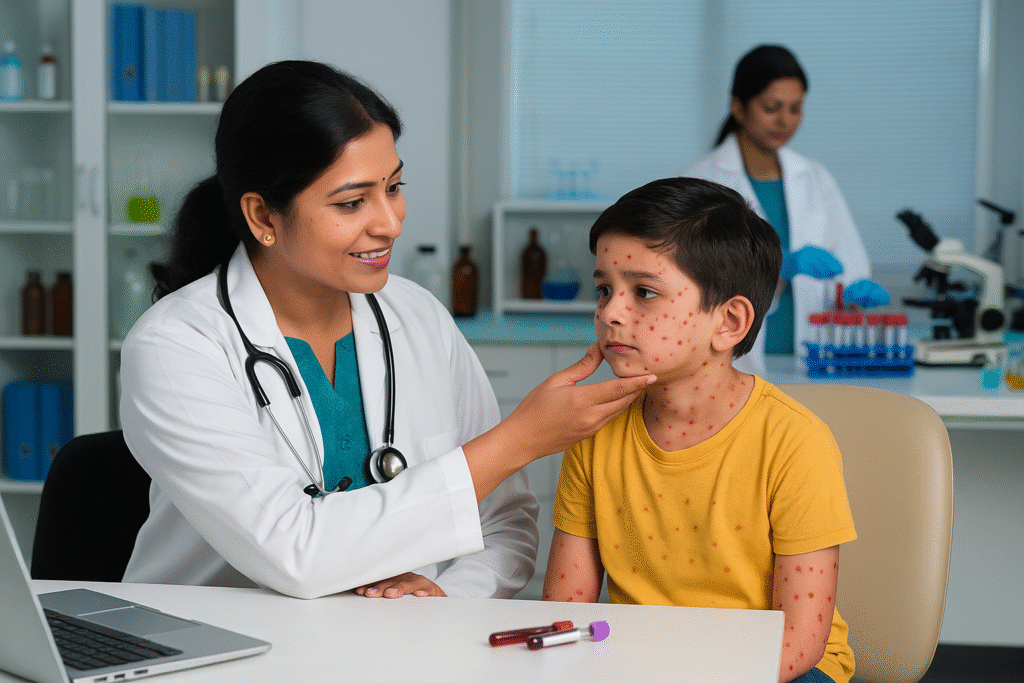

Conquering Chickenpox: Essential Tips for a Speedy Recovery
- Understand how chickenpox spreads, key symptoms, and when it’s most contagious.
- Follow Indian household–friendly home care tips to reduce itching, fever, and scarring.
- Know which foods to eat and avoid during recovery for faster healing.
- Recognise warning signs that mean you should see a doctor or visit a hospital immediately.
- Learn how to prevent chickenpox through vaccination and basic hygiene practices.
- Explore relevant blood tests and health packages at Seralis Lab that support diagnosis and recovery monitoring.
What Is Chickenpox?
Chickenpox (varicella) is a highly contagious viral infection caused by the varicella-zoster virus. It usually affects children but can occur at any age. The disease is characterised by an itchy, blister-like rash, fever, and body ache. In most people, it is self-limiting and resolves within 7–10 days, but it can be more serious in adults, pregnant women, and people with weak immunity.
How Does Chickenpox Spread?
Chickenpox spreads very easily from person to person, especially in close-contact settings like families, schools, and offices.
Modes of Transmission
- Airborne droplets: When an infected person coughs, sneezes, or talks, the virus can spread through tiny droplets in the air.
- Direct contact: Touching the fluid from chickenpox blisters can transmit the virus.
- Indirect contact: Less commonly, touching contaminated objects like clothes or bedsheets recently used by an infected person can also spread infection.
Period of Contagiousness
- A person is contagious from 1–2 days before the rash appears until all blisters have crusted over.
- This usually takes about 7–10 days from the start of the rash.
- Children should stay home from school until all lesions are crusted.
Common Symptoms of Chickenpox
Symptoms appear about 10–21 days after exposure to the virus.
Early Symptoms (1–2 Days Before Rash)
- Mild fever
- Headache
- Fatigue and weakness
- Loss of appetite
- Body aches
Rash Stages
- Red spots: Small red bumps appear first, usually on the face, trunk, and back, and then spread to arms, legs, and scalp.
- Fluid-filled blisters: Within hours, spots turn into itchy, clear, fluid-filled blisters.
- Crusting and scabbing: After a day or two, blisters break and form crusts or scabs.
New crops of lesions can appear for several days, so you may see spots, blisters, and scabs all at the same time.
When Symptoms Are More Serious
- High fever (above 102°F or 38.9°C)
- Breathing difficulty
- Confusion or drowsiness
- Severe cough or chest pain
- Very severe headache with vomiting or neck stiffness
How Is Chickenpox Diagnosed?
Chickenpox is often diagnosed clinically by a doctor based on the history of exposure and the typical appearance of the rash. However, in adults, pregnant women, or people with weak immunity, tests may be used to confirm infection or evaluate complications.
Clinical Examination
- Doctor checks the pattern and stages of rash.
- Past history of varicella infection or vaccination is assessed.
- Close-contact history (family members, schoolmates, colleagues) is reviewed.
Laboratory Tests That May Be Advised
- Complete Blood Count (CBC): Helps evaluate infection and overall blood health.
- Liver function tests (LFT): Sometimes relevant when there is medicine use or suspected complications.
- Varicella-zoster virus (VZV) antibody tests or PCR: Usually reserved for special situations like pregnancy, severe disease, or uncertain diagnosis.
Home Care Tips for a Speedy Chickenpox Recovery
Most people with chickenpox can be treated at home with supportive care and careful hygiene. The goal is to manage fever, reduce itching, and prevent secondary infection of the blisters.
1. Control Fever Safely
- Use paracetamol (as advised by a doctor) to reduce fever and discomfort.
- Do not give aspirin to children or teenagers, as it is associated with Reye’s syndrome, a serious condition.
- Avoid self-medicating with painkillers like ibuprofen without medical advice, especially in children.
2. Relieve Itching and Rash Discomfort
- Cool baths: Give lukewarm or cool-water baths; avoid very hot water as it can worsen itching.
- Mild cleansing: Use a gentle, fragrance-free soap; do not scrub the skin.
- Calamine lotion: Applying calamine lotion on the spots can help soothe itching (avoid using on eyes or mouth).
- Cold compresses: Clean, soft cloth dipped in cool water can be applied on very itchy areas.
- Loose cotton clothing: Dress the patient in soft, breathable cotton clothes to avoid friction and irritation.
3. Prevent Scratching and Scarring
- Cut fingernails short and keep them clean to minimise skin damage.
- For small children, consider using cotton mittens or socks on the hands during sleep.
- Remind older children and adults not to scratch; pat the area gently instead.
- Scratching can lead to bacterial infection, pus formation, and permanent scars.
4. Stay Hydrated
- Encourage frequent small sips of water, coconut water, and homemade ORS (oral rehydration solution).
- Warm soups (dal soup, vegetable soup, chicken soup) are soothing and nourishing.
- Fresh fruit juices (diluted, not too acidic) like mausambi, pomegranate, or watermelon juice can be given if tolerated.
- Avoid aerated drinks and very sugary packaged juices.
5. Rest and Isolation
- Take complete rest to help the immune system fight the infection.
- Stay in a well-ventilated room, away from direct dust and smoke.
- Isolate the patient from pregnant women, newborns, elderly people, and those with weak immunity.
- Children should stay away from school or daycare until all lesions have crusted.
Diet Tips During Chickenpox (Indian Context)
A nutritious, light, and easy-to-digest diet can support faster recovery and help the immune system.
Foods to Include
- Soft, cooked foods: Khichdi, daliya, upma, idli, soft chapati with ghee, curd rice.
- Protein-rich options: Dal, moong dal, rajma (well-cooked), chana, paneer, tofu, curd, buttermilk, egg (if not allergic), and soft chicken soup.
- Fruits: Banana, papaya, mausambi, apple (stewed or mashed), pomegranate; these provide vitamins and energy.
- Fluids: Coconut water, lemon water, homemade soups, thin buttermilk.
- Healthy fats: Small amounts of ghee or cold-pressed oils can support energy needs.
Foods to Avoid
- Very spicy, fried, and oily foods that can worsen discomfort.
- Very salty or tangy foods that irritate mouth sores.
- Packaged junk food, chips, instant noodles, and deep-fried snacks.
- Very cold or very hot food and beverages if there are mouth ulcers.
- Excess caffeine and energy drinks.
When to See a Doctor or Visit a Hospital
While most cases are mild, you should seek medical care if you notice:
Red-Flag Warning Signs
- Persistent high fever (above 102°F) for more than 3 days.
- Shortness of breath, fast breathing, or chest pain.
- Very severe headache, stiff neck, vomiting, or confusion.
- Severe weakness, difficulty walking, or imbalance.
- Blisters becoming very red, swollen, painful, or filled with pus (signs of bacterial infection).
- Reduced urine output, dry mouth, or dizziness (possible dehydration).
- Rash involving eyes or vision problems.
High-Risk Groups
Consult a doctor immediately if chickenpox is suspected in:
- Pregnant women
- Newborn babies
- Adults above 18–20 years
- People with diabetes, cancer, HIV, or other immune-suppressing conditions
- People on long-term steroids or chemotherapy
Chickenpox in Children vs Adults
Children
- Most children have a mild to moderate form of disease.
- Fever is usually lower, but itching can be intense.
- Complications are less common but can occur.
Adults
- Adults tend to have more severe symptoms, higher fever, and more extensive rash.
- Higher risk of complications such as pneumonia, hepatitis, or brain involvement (encephalitis).
- Adults should seek medical consultation early.
Possible Complications of Chickenpox
Most healthy people recover fully, but complications can occur in some cases, especially in high-risk groups.
Common Complications
- Skin infection: Bacterial infection of scratched lesions, leading to pus, swelling, and scarring.
- Dehydration: Due to fever, poor intake, and vomiting.
- Ear infection: Especially in young children.
Serious Complications (Less Common)
- Pneumonia: More common in adults, smokers, and pregnant women.
- Encephalitis or meningitis: Infection of the brain or its coverings, causing severe headache, seizures, confusion.
- Hepatitis: Liver involvement in severe cases or in immunocompromised individuals.
- Sepsis: Widespread infection in the bloodstream.
If any of these are suspected, immediate hospital care is essential.
Prevention of Chickenpox
1. Chickenpox Vaccine
- The varicella vaccine is the most effective way to prevent chickenpox.
- Usually given in two doses (as per paediatrician’s or physician’s recommendation).
- Even if a vaccinated person gets chickenpox, it is usually milder and heals faster.
2. Basic Hygiene and Isolation
- Keep the infected person isolated until all blisters have crusted.
- Wash hands frequently with soap and water.
- Do not share towels, clothes, or utensils.
- Use a separate bed or bedding for the patient.
Links to Relevant Tests and Packages at Seralis Lab
For individuals with chickenpox—especially adults, pregnant women, or those with other health conditions—doctors may advise some blood tests to monitor overall health and detect complications early. Below are contextually relevant tests and packages that can support clinical care and follow-up.
–>
1. Complete Blood Count (CBC)
A CBC helps evaluate overall blood health, detect infection or inflammation, and monitor recovery.
Complete Blood Count (CBC) – Test Details at Seralis Lab
2. Liver Function Test (LFT)
In moderate to severe chickenpox or when medicines affecting the liver are used, your doctor may ask for LFT to monitor liver health.
Liver Function Test (LFT) – Test Details at Seralis Lab
3. Basic Infection & Wellness Profiles
In adults or people with other conditions, a broader health profile can help doctors assess immunity and detect any underlying problems:
Recovery Timeline: What to Expect
- Days 1–2: Fever, tiredness, and first appearance of red spots.
- Days 3–5: Maximum number of blisters appear; itching and discomfort are highest.
- Days 6–10: Blisters dry up and form scabs; fever usually settles.
- After Day 10: Most scabs fall off; mild marks may remain for a few weeks.
Healing varies from person to person. Follow your doctor’s advice closely and do not stop any prescribed medicine without consulting them.
How to Avoid Scars After Chickenpox
- Avoid scratching or picking at scabs.
- Keep skin clean and gently pat dry after baths.
- Use only doctor-approved creams or ointments on the lesions.
- After recovery, protect skin from strong sunlight; use a gentle sunscreen or cover the area when going out.
- If scars are significant, consult a dermatologist about treatment options like topical creams or procedures.
FAQs
Question: How long does chickenpox last?
Most people recover within 7–10 days from the appearance of the first rash. However, mild marks or pigmentation can remain for a few weeks. Contagiousness usually ends once all blisters have crusted over.
Question: Can adults get chickenpox?
Yes. Adults who have never had chickenpox or the varicella vaccine can get infected. In adults, the disease tends to be more severe and may lead to complications like pneumonia, so early medical evaluation is important.
Question: Is chickenpox dangerous during pregnancy?
Chickenpox during pregnancy can be serious for both mother and baby. It may increase the risk of complications such as pneumonia and, if infection occurs early in pregnancy, rare birth defects. Pregnant women with suspected exposure or symptoms must contact their doctor immediately.
Question: Can I bathe if I have chickenpox?
Yes. Gentle, lukewarm baths help keep the skin clean and reduce the risk of infection. Use mild soap, avoid scrubbing, and pat the skin dry with a soft towel.
Question: Does everyone with chickenpox need blood tests?
No. Many healthy children with mild symptoms may not need any blood tests. However, adults, pregnant women, or people with other health issues may be advised tests like CBC or LFT to monitor health and complications, based on the doctor’s judgment.
Question: Can chickenpox occur again after once having it?
Most people develop long-lasting immunity after one episode of chickenpox. It is rare but possible to get it again, especially in those with weak immunity. The same virus can also reactivate later in life as shingles (herpes zoster).
Question: When can my child go back to school after chickenpox?
Your child can usually return to school when all blisters have dried and formed scabs, and there is no new rash—typically about 7–10 days after the rash first appears. Always follow your paediatrician’s advice and any school health policies.
References
- “Chickenpox (Varicella)” by Centers for Disease Control and Prevention (CDC) (Reviewed 2023). Source
- “Varicella (Chickenpox) – Clinical Overview” by World Health Organization (WHO) (2024). Source
- “Chickenpox in Children and Adults” by National Health Service (NHS), UK (Reviewed 2023). Source
- “Varicella-Zoster Virus Infections” by Merck Manual Consumer Version, Merck & Co. (2022). Source
Key Takeaways
- Chickenpox is a contagious viral infection characterized by an itchy rash, fever, and body aches affecting mainly children and can have serious implications for adults and high-risk groups.
- To aid recovery, follow home care tips such as managing fever, relieving itching, staying hydrated, and avoiding itching to lessen scarring.
- Recognize warning signs that require medical attention, like persistent high fever, difficulty breathing, and signs of bacterial infection.
- Prevention includes vaccination, good hygiene practices, and isolating infected individuals until all blisters crust over.
- Diet plays a crucial role in recovery; focus on soft, nutritious foods and avoid spicy, oily, and junk food.