
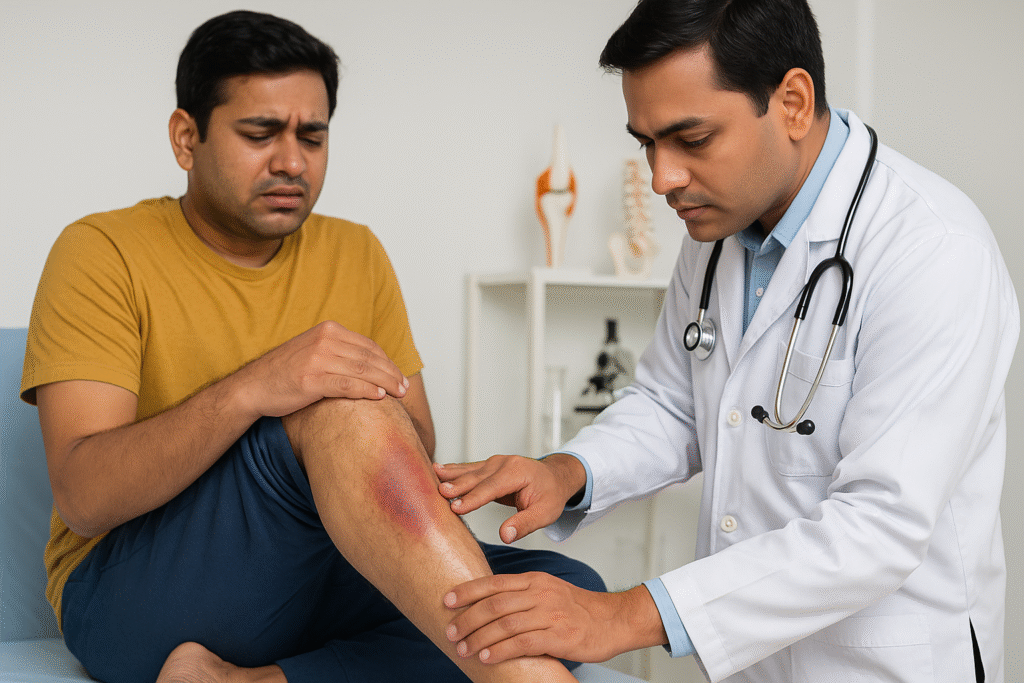

Broken vs Bruised Bone: How to Know If You Have a Fracture
After a fall, accident, or sports injury, one question usually pops up: “Is it just a bruise, or is the bone broken?” Knowing the difference between a bruised bone and a fracture is crucial, because delaying proper treatment can lead to long-term pain, deformity, or joint problems.
This guide explains the difference between bone bruises and fractures, key symptoms to watch for, when to seek urgent help, how doctors diagnose them, and what tests and health packages from Seralis Lab can support your recovery and overall bone health.
What Is a Bone Bruise?
A bone bruise (bone contusion) is an injury to the bone that is less severe than a fracture. It happens when a strong impact damages the bone’s inner structure and nearby blood vessels, but does not completely crack or break the bone.
Bone bruises usually affect the outer layer of bone (the cortex) and the spongy part inside (trabecular bone). They can be very painful and may take weeks to months to heal.
Common Causes of Bone Bruising
- Sports injuries (football, basketball, cricket, running, etc.)
- Falls on a hard surface
- Direct blows or collisions
- Twisting injuries around joints (knee, ankle, wrist)
- Motor vehicle accidents
Typical Symptoms of a Bone Bruise
- Deep, aching pain that gets worse with movement or pressure
- Swelling and tenderness over the injured area
- Skin discoloration (blue, purple, or yellowish bruise)
- Stiffness around the nearby joint
- Limited movement but usually still able to bear some weight or move the limb
With a bone bruise, the pain is often intense but tolerable; you may still be able to walk or use the limb, though it hurts. However, this is not a reliable rule—only proper evaluation can confirm whether a bone is bruised or broken.
What Is a Fracture (Broken Bone)?
A fracture is a break in the continuity of the bone. It can be a thin hairline crack or a complete break that shifts the bone out of its normal position.
Unlike a bruise, a fracture is a structural failure of the bone and usually requires more active medical treatment, such as immobilization in a cast, splint, or sometimes surgery.
Types of Fractures
- Hairline or stress fracture – very small crack; common in runners and athletes
- Simple (closed) fracture – bone is broken but skin is intact
- Compound (open) fracture – broken bone pierces the skin; medical emergency
- Comminuted fracture – bone breaks into three or more pieces
- Greenstick fracture – incomplete break, common in children
- Pathological fracture – fracture due to weakened bone (e.g., osteoporosis, cancer)
Common Symptoms of a Fracture
- Sudden sharp pain at the time of injury
- Severe pain with any movement or weight bearing
- Swelling and rapid bruising
- Deformity – limb looks bent, twisted, shortened, or out of place
- Inability to use the limb – unable to walk, lift, or grip
- Grinding or crackling sensation (crepitus) with movement
- Visible bone or open wound in case of open fracture
If you suspect a fracture, do not ignore it or “wait and watch.” Early immobilization and treatment protect the bone and surrounding tissues from further damage.
Bone Bruise vs Broken Bone: Key Differences
| Feature | Bone Bruise (Contusion) | Fracture (Broken Bone) |
|---|---|---|
| Severity | Milder injury to bone structure | Actual break/crack in the bone |
| Pain | Aching, deep pain; may still move with discomfort | Sharp, intense pain; movement often impossible |
| Swelling & Bruising | Common, often gradual | Usually marked and often rapid |
| Deformity | Absent | May be present (bent, twisted limb, abnormal angles) |
| Weight Bearing / Use | Often possible, though painful | Often not possible, especially in major fractures |
| Diagnosis | May not show on X-ray; MRI more accurate | Usually visible on X-ray |
| Healing Time | Few weeks to a few months | 6–12 weeks or more, depending on type |
How to Tell If a Bone Is Broken or Just Bruised
It is impossible to be 100% sure without proper medical evaluation and imaging, but the following signs strongly suggest a fracture:
Signs That Point More Towards a Fracture
- Bone or joint looks out of shape or misaligned
- You hear or feel a crack or snap at the time of injury
- Severe, sharp pain that worsens with slightest movement
- Inability to stand, walk, lift, or grip using the injured part
- Shortening or rotation of a limb (e.g., leg turned outward after a fall)
- Open wound with bone visible (medical emergency)
Signs More Consistent with a Bone Bruise
- Pain is significant but gradually easing over days
- No visible deformity of the limb
- You can still move or put some weight, though it hurts
- Bruising and swelling are present but mild to moderate
However, hairline or stress fractures can mimic a bone bruise and may not show obvious deformity. If pain is not improving or worsens over a few days, get it checked.
When to See a Doctor Immediately
Seek urgent medical or emergency care if you notice any of the following:
- Suspected fracture of hip, thigh, spine, skull, or pelvis
- Open fracture – bone visible through skin or large open wound
- Heavy bleeding or blood-soaked dressing
- Severe pain, inability to move the joint or limb
- Numbness, tingling, or loss of sensation below the injury
- Skin over the injury is very pale, blue, or cold (possible loss of blood supply)
- Suspected fracture in children or older adults with osteoporosis
- History of cancer, long-term steroid use, or bone disease with new bone pain after minor injury
How Bone Bruises and Fractures Are Diagnosed
A healthcare provider usually follows a structured approach:
1. Clinical Examination
- Assessment of pain, swelling, deformity, and function
- Checking blood flow, nerve sensation, and muscle strength
- Review of injury mechanism (how it happened)
2. Imaging Tests
X-ray
The first-line test to look for fractures. It can show most simple and complex fractures, bone alignment, and joint involvement.
MRI (Magnetic Resonance Imaging)
- Best for detecting bone bruises, stress fractures, and soft tissue injuries
- Useful when X-ray is normal but pain persists or fracture is still suspected
CT Scan
- Provides highly detailed cross-sectional images of bones
- Often used for complex fractures (e.g., face, spine, pelvis, or joint surfaces)
3. Blood Tests to Support Bone Health & Healing
While blood tests do not diagnose a fracture directly, they help identify underlying conditions affecting bone strength and healing, like vitamin D deficiency, calcium imbalance, or osteoporosis.
Relevant tests available from Seralis Lab include:
- Vitamin D (25-OH) Test – assesses vitamin D levels, crucial for calcium absorption and bone strength.
- Serum Calcium Test – evaluates calcium levels, important for bone mineralisation.
- Bone Profile Panel – typically includes calcium, phosphorus, alkaline phosphatase and related markers for overall bone metabolism.
- Vitamin B12 Test – supports nerve health and overall recovery.
For a more complete screening, you can choose a comprehensive package such as:
- Bone Health Checkup Package – includes vitamin D, calcium, phosphorus, alkaline phosphatase, and related tests to assess bone density risk and metabolism.
- Senior Wellness – Bone & Joint Package – designed for adults over 40 or those with frequent falls, fractures, or joint pain.
Treatment: Bruised Bone vs Broken Bone
Treatment for Bone Bruise
Most bone bruises are managed conservatively:
- Rest: Avoid activities that worsen the pain.
- Ice: Apply ice packs (wrapped in cloth) for 15–20 minutes every few hours for the first 48–72 hours.
- Compression: Use an elastic bandage if advised to reduce swelling.
- Elevation: Keep the injured part raised above heart level when possible.
- Pain relievers: Paracetamol or doctor-prescribed medicines.
- Support or bracing: For injuries near joints (like knee or ankle), a brace may be used temporarily.
- Gradual physiotherapy: Gentle exercises to restore movement and strength once pain reduces.
Healing of a bone bruise may take a few weeks to several months, depending on the severity and your general health.
Treatment for Fracture
Fracture treatment depends on the type and location of the break:
- Immobilisation: Plaster cast, splint, or brace to hold bone fragments in place while they heal.
- Reduction: Realigning the broken bone ends, either:
- Closed reduction – manipulated without surgery.
- Open reduction – surgical alignment using plates, screws, rods, or pins.
- Pain control: Painkillers and anti-inflammatory medications as prescribed.
- Surgery: Necessary for complex, displaced, open, or joint-involving fractures.
- Rehabilitation: Physiotherapy to restore strength, flexibility, and function after immobilisation.
Optimising Healing with Nutrition & Lab Monitoring
Good nutrition and metabolic health significantly improve bone healing. Consider monitoring and optimising:
- Vitamin D & Calcium status – via the:
- Overall metabolic health – uncontrolled diabetes, thyroid disorders, or chronic inflammation can delay healing. Screening packages like:
can help identify and manage these risks.
Who Is at Higher Risk of Fractures?
Some people are more likely to suffer fractures even with relatively minor trauma:
- Older adults, especially postmenopausal women
- People with osteoporosis or low bone mineral density
- Individuals with vitamin D deficiency or chronic low calcium intake
- Those on long-term steroid therapy (for asthma, arthritis, etc.)
- People with chronic kidney disease, thyroid or parathyroid disorders
- Individuals with a history of repeated fractures or strong family history of osteoporosis
If you fall into any of these risk groups, early screening and prevention are essential. You can consider:
- Bone Health Checkup Package – suitable for adults with risk factors or early joint pain.
- Senior Wellness – Bone & Joint Package – designed for age-related bone and joint concerns.
Recovery and Prevention: Protecting Your Bones
Tips for Faster Recovery
- Follow your doctor’s instructions on rest, immobilisation, and physiotherapy.
- Eat a balanced diet rich in calcium (milk, curd, paneer, leafy greens, nuts) and vitamin D (sunlight exposure, fortified foods, or supplements if prescribed).
- Avoid smoking and limit alcohol – both impair bone healing.
- Monitor and manage underlying diseases like diabetes, thyroid issues, or kidney disease.
- Do not stop your medications (like painkillers or blood thinners) without medical advice.
Preventing Future Bone Injuries
- Maintain a healthy body weight to reduce stress on bones and joints.
- Engage in weight-bearing exercises like walking, light jogging, or resistance training (under guidance if you have osteoporosis).
- Wear appropriate protective gear during sports and physical activities.
- Fall-proof your home – remove loose rugs, improve lighting, use grab bars in bathrooms for elderly family members.
- Get routine bone health tests such as Vitamin D, Calcium, and the Bone Health Checkup Package if advised by your doctor.
FAQs: Broken vs Bruised Bone
1. Can a bone bruise be as painful as a fracture?
Yes. Bone bruises can cause deep, persistent pain that sometimes feels as intense as a minor fracture. Pain level alone cannot distinguish the two. Imaging like X-ray or MRI is often necessary for accurate diagnosis.
2. How long does a bone bruise take to heal?
A mild bone bruise may heal in a few weeks, but more severe contusions, especially around weight-bearing joints like the knee or ankle, can take 2–3 months or longer. Healing time also depends on your age, nutrition, and underlying health.
3. Will a bone bruise show on an X-ray?
No. Bone bruises usually do not appear on standard X-rays. X-rays are very good at detecting most fractures but not bone contusions. MRI is the preferred imaging test to visualise bone bruises.
4. Can you walk on a fractured bone?
Some hairline or stress fractures—especially in the foot, ankle, or shin—may still allow limited walking, but this can worsen the injury. If you have persistent pain on walking or standing after an injury, you should get an evaluation and an X-ray, even if you can still walk.
5. Do I always need a cast for a fracture?
Not always. Some small, stable fractures may be treated with a splint, brace, or even a sling. Others, especially unstable or displaced fractures, may need casting or surgery. The treatment depends on the bone involved, the type of fracture, and your overall health.
6. How can I check if my bones are weak or at risk of fracture?
Your doctor may recommend a combination of:
- Clinical risk assessment (age, gender, family history, medications, lifestyle)
- Bone mineral density (DEXA) scan
- Blood tests for vitamin D, calcium, phosphorus, and bone turnover markers
You can support this evaluation with lab packages like the Bone Health Checkup Package or Senior Wellness – Bone & Joint Package from Seralis Lab.
7. Do low vitamin D or calcium levels increase fracture risk?
Yes. Low vitamin D reduces calcium absorption and can lead to weak, brittle bones over time, increasing fracture risk. Checking your Vitamin D and Serum Calcium levels and correcting deficiencies under medical guidance is important for long-term bone health.
8. Should I get blood tests after a fracture?
In many cases, yes—especially if you are older, have repeated fractures, or your doctor suspects underlying conditions such as osteoporosis, hormonal issues, or vitamin/mineral deficiencies. Tests like those in the Complete Health Checkup Package or Bone Health Checkup Package can provide useful insights.
Summary
A bone bruise and a fracture can feel similar initially, but a fracture is a complete break in the bone and usually needs more intense treatment. Because symptoms can overlap, self-diagnosis is risky.
- If you have severe pain, visible deformity, inability to use the limb, or an open wound, seek urgent medical care.
- Do not ignore persistent pain after a fall or injury, even if you can still walk or move the joint.
- Supporting your recovery and long-term bone health with the right tests—like vitamin D, calcium, bone profile, and comprehensive packages from Seralis Lab—can make a meaningful difference.
Disclaimer: This article is for information and awareness only and does not replace a doctor’s consultation. Always consult a qualified healthcare professional for diagnosis and treatment of any injury or medical condition.
References
- Bruce B, Eide E, Smith B, et al. Bone Bruises: What Are They? Cleveland Clinic. Available at: https://my.clevelandclinic.org/health/diseases/21665-bone-bruise. Accessed 2025.
- American Academy of Orthopaedic Surgeons (AAOS). Fractures (Broken Bones). OrthoInfo. Available at: https://orthoinfo.aaos.org/en/diseases–conditions/fractures-broken-bones/. Accessed 2025.
- Tehranzadeh J, Tao C, Browning CA. MR imaging of bone marrow edema-like signal in the extremities. Radiol Clin North Am. 2004;42(1):123–146. doi:10.1016/S0033-8389(03)00147-4
- NIH Osteoporosis and Related Bone Diseases National Resource Center. Bone Health and Osteoporosis: A Report of the Surgeon General. Available at: https://www.ncbi.nlm.nih.gov/books/NBK45513/. Accessed 2025.
- Holick MF. Vitamin D deficiency. N Engl J Med. 2007;357:266–281. doi:10.1056/NEJMra070553